“By the sweat of your face you shall eat bread, till you return to the ground, for out of it you were taken.”
All creatures were made from the earth, male and female, and they were created equal in their existence which was to take another part in God’s plan of creation, different from humans. Animals are not soul mates as humans are, even though they have souls.
Why was Eve not made from the earth as Adam was? God was looking for a soul mate for Adam (Gen 2:18-20) Being made from the earth would make Adam and Eve equals siblings this was not God’s plan. For the animals they were all made from the earth and therefore had equal status in life, this is why a helper was not found for him. Adams helper had to come from him and as Adam could not give birth then a rib of his was used to create Eve (his soul mate).
Adam was not made of the earth of the sanctuary, (garden of Eden), Adam was created outside of the garden, why this matter: Adam was not created in God’s sanctuary, Adam was created from the very earth to which he will later return outside of the sanctuary. On his return to where he was created, a curse comes to the land.
Where brut and human creation differ: Both are created from the earth and shared the same material, but not shared the same being. Brut were created as a living soul whereas Adam was formed from the ground and given the breath of life. This already creates a distinction. The animals share the same earthly substance and creatureliness. But Adam stands alone from the animal. Adam is addressed by God, he is a given moral responsibility. And Adam alone was entrusted with naming (authority), and capable of covenantal relationship with God. So while there is physical kinship, there is no personal equivalence. So why did God bring the animals to Adam? This is not a random episode, and it is not about companionship in general.
“But for Adam there was not found a helper corresponding to him.” (Genesis 2:20)
Lets take a look at the Hebrew phrase ezer kenegdo and what it means: A helper, corresponding to him, Facing him and Matching him. This is relational symmetry, not usefulness. God is teaching Adam something experientially: Adam names every creature and in doing so, he recognizes differences, and authority without correspondence produces loneliness, not fulfillment. The animals fail the test not because they are inferior, but because they are other.
Are animals “soul mates” in any sense? Only in a very limited and non-biblical sense could that idea arise. Animals are Living souls (nephesh chayyah). Animals are animated beings capable of affection and companionship. But they are not covenant partners. Brut does not share God’s image, they do not engage in moral self-giving or participate in shared vocation and do not have a mirror personhood. So they can be companions, but never correspondents. The Bible never treats animals as relational equals — nor does it diminish them.
The existence of Adam and Eve and its outcome. If Eve were made of the same substance (dust) as Adam, and God breathed life into her directly as He did Adam, what would then be the connection between Adam and Eve? They would be two humans, equal in nature, but not one humanity. And that difference is decisive, you would have the same substance the breath and a shared humanity if Eve had been formed independently from dust and directly animated by God’s breath.
They would of shared the same substance the same breath and shared the same humanity. They would of shared humanity. The equality of being and the Image of God as shared Humanity (same kind) as individuals not as the two becoming one making up humanity, they would not share origin as they would be two parallel humans, not one humanity expressed in two persons. What does this matter? There has not been: ontological “bone of my bones”, there would not of been a single federal head, no natural explanation for “one flesh”, and the unity would be covenantal only, not intrinsic. That would mean their relationship would resemble siblings, more than one body.
Why Genesis (God) refuses that model? Genesis intentionally avoids the structure of two breathings and two dust-formations, to accomplish: One breathing, one human source, and one life shared. And by this intention Eve is not given a separate divine inbreathing because she does not need one. She lives because Adam lives. That is the point. Eve is not diminished by this, her life is not second rate, borrowed or inferior, it is a shared life not a lesser life. The same is true later: Children do not receive a new Genesis-style inbreathing yet they are fully human. Life begets life.
Why “helper” requires shared origin? If Eve were separately created, she could help Adam functionally but she could not help him be human. The problem was not labour it was ontological solitude, only someone from him could stand with him.
In the previous paragraphs we have discussed hypothetical (contrastive) reasoning of the existence of Adam and Eve. The following will explain: Why contrastive thought does matter.
By exploring what could have been, we see more clearly why what is matters. This is not speculation for its own sake — it is clarification. Hypotheticals: Expose hidden assumptions and define boundaries of meaning showing necessity, not accident by highlighting intentionality in the text. In other words, Hypothetical contrast helps us see design, not randomness.
Scripture itself uses this kind of reasoning: what “if”, biblical writers often argue implicitly this way: what If righteousness came by the law, then Christ died in vain, what If the dead are not raised, your faith is futile, what If Abraham were justified by works… These are theological hypotheticals — not alternate realities, but tests of coherence.
“Hypothetical reasoning can clarify truth by contrasting what might have been with what God has actually revealed and why.”
Genesis 2:23 And Adam said: “This is now bone of my bones And flesh of my flesh; She shall be called Woman, Because she was taken out of Man.”
On God’s grand stage of creation, a new creation takes center stage: humanity, in the very image and likeness of the creator, this is something even the Angels have not seen before.
“Bone of my bones” what is Adam actually saying here? Genesis 2:23 is not a romantic line; it is a legal–ontological declaration.“ This at last is bone of my bones and flesh of my flesh.” Adam is not merely recognizing similarity as in a sibling, he is recognizing a shared origin as a part of who he is, this becomes a shared life and the making and shaping of humanity. This also emphasizes and establishes that Eve is not like Adam because Eve is from Adam, the one life that is expressed in the two persons makes humanity. This is why the verse immediately moves to: “Therefore a man shall leave his father and mother and hold fast to his wife, and they shall become one flesh.” The “therefore” matters. Marriage rests on prior unity, not contractual invention.
Eve’s role: helper, not subordinate — but also not head and this we must understand as in the order of creation. Eve is equal in being as a corresponding helper (ezer kenegdo). That phrase does not mean, weakness but strength as complementarity not replacement as a shared calling in support with Adam. Eve is given to Adam for life, not for command. However, and this is essential to know: Eve as helper not as headship. The command regarding the tree is given to Adam before Eve existed (Genesis 2:16–17). This is not incidental.
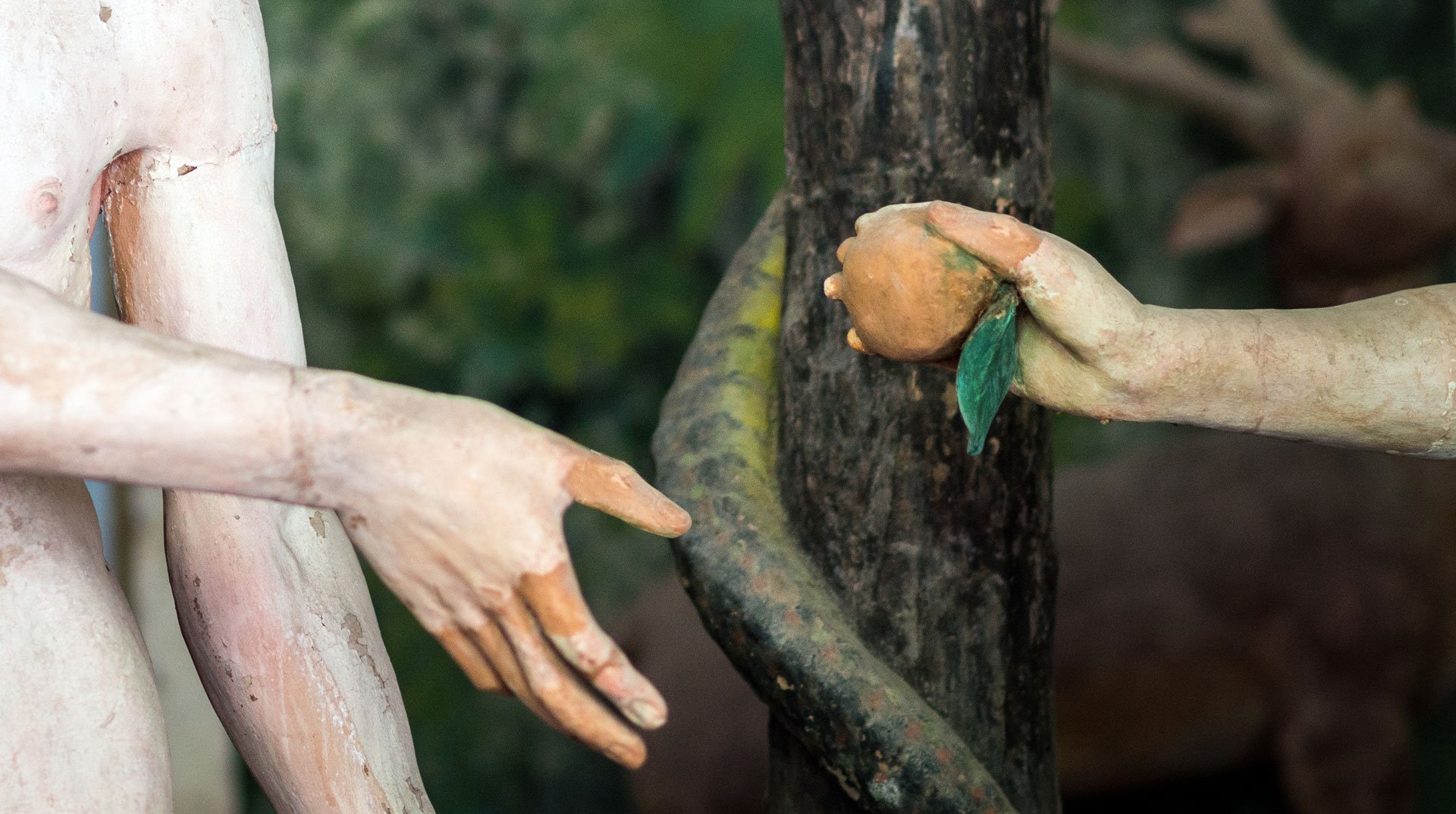
Genesis 3 is precise, not vague. The deception order matters, the serpent addresses Eve directly and Eve listens and evaluates the situation and decides to eat, Ah look, nothing has happened, so Eves gives to Adam where Adam with out a thought of what God said ate as well without deception, and scripture later confirms this distinction explicitly:
“Adam was not deceived, but the woman was deceived and became a transgressor.” (1 Timothy 2:14)
Genesis 3:11-13 And He said, “Who told you that you were naked? Have you eaten from the tree of which I commanded you that you should not eat?” 12 Then the man said, “The woman whom You gave to be with me, she gave me of the tree, and I ate.” 13 And the Lord God said to the woman, “What is this you have done?” The woman said, “The serpent deceived me, and I ate.”
This is not about blame—it is about mode of failure.
Why Adam’s sin is decisive? Because Eve did not sin, and here’s why: This is the point many miss. Eve is deceived and Adam sins knowingly. It was Adam who received the command directly and was present (the text implies proximity) and eats with full awareness. This is why Scripture consistently says: “Through oneman sin entered the world.” Not through Eve or deception or through shared failure” through Adam, the federal headship of Adam. Adam was not deceived but influenced by Eve. Eve did not “fall humanity” — Adam did. This is not minimizing Eve’s transgression. It is honoring Scripture’s own explanation. Eve’s act introduces disobedience, but not disobedience to God but to Adam her husband where as Adam’s act introduces death to humanity. And the reason for this is that Adam is the covenant bearer, he was the one entrusted with the command the representative head of humanity. Until Adam eats, humanity does not fall.
theological coherence is complementarism not patriarchy. Eve’s role after the fall is confirmed: Eve is named after the fall (“mother of all living”). Her role becomes life-bearing, not head-bearing’ Redemption comes through her seed, but not through her authority. Again: distinction, not diminishment.